The words still burned like venom in his veins, an invisible pain to match the purple splotches already forming on his skin. Ryan closed his eyes and let his head fall back until it met the wall. He was exhausted. His arms ached, his knees felt stiff, and he was counting his heartbeats by the sharp throbbing in his head and right cheek.
He took a deep breath and held it, exhaling slowly on the fourth aching pulse under his eye, then breathed in again. If he kept his eyes closed for too long he’d begin seeing things he didn’t want to remember. But if he focused on the darkness behind his lids and took in a deep breath, he could just make out the smell of mint and stale tobacco smoke.
That was his Gram, mint oil on her wrists and cigarettes in her pocket. It had barely been a year and yet already getting harder to remember her. Ryan couldn’t remember the sound of her voice. He thought he could picture her smile, but was starting to doubt its accuracy. Only the smell of the house seemed to bring her back and he desperately needed her back.
The sound of paws scratching against hardwood lifted Ryan’s head from the wall quickly and with throbbing regret. It was a distinct, lopsided sound of three paws and a rubber sole running up stairs and down the hall.
“Hey, Tucker,” Ryan said as the Australian Sheppard rounded the corner into the room. He ran over to Ryan with intermittent hops as his hind leg moved awkwardly in its prosthetic. Tail wagging, his tongue found Ryan’s face with relentless enthusiasm.
“Alright, boy,” he said, chuckling despite himself, “where’s your Mama?”
The dog barked in reply.
“You’re gonna need to find a new hiding spot,” said a voice from the doorway. “I don’t think the new residents are going to let you sneak in here every time you decide to run away from home.”
Alex was leaning against the doorframe, curly hair piled high on the top of her head, wearing an oversized t-shirt that covered her shorts. She was referring to the bright, new “SOLD” sticker that had haphazardly been slapped across the sign out in the front yard.
Ryan looked around the room as Tucker laid down beside him, the metal braces on his bad leg grinding against the floor as he stretched it out. It was empty, the whole house was. Pops was to remain in the house after Gram died, in-home care and all living expenses managed by Ryan’s father. For whatever reason, the mortgage payments were never made. It was supposedly just a huge misunderstanding, but what difference did that make? Barely seven months after Gram was buried, the bank foreclosed on the house and Pops was moved to a nursing home.
It’s amazing how quickly an empty house begins to feel vacant. There was nothing left of Gram here, only the smell, and even that was fading.
“You never know, they might enjoy the company,” he joked, scratching Tucker’s hip along the edge of his prosthesis. The room was dark but Ryan still hid his grimace as the dog rested his head on a tender spot on his thigh. He couldn’t let Alex see him like this. “What are you doing here?”
Alex folded her arms across her chest, fixing him with a concerned stare. He didn’t need to see it to know. She often looked at him that way.
“Got a call from your mom. Wanted to know if I had heard from you.”
The floorboards groaned quietly as Alex crossed the room and sat on the floor beside him. Ryan kept his face turned away, focused on Tucker.
“Bad night?”
“Nah,” he said, throwing her a brief smile. “Just a typical Thursday night with the old man.”
“What did he say this time?”
You think I don’t see you sneaking around with that so-called friend of yours? I’m not an idiot, you sick pervert! If I ever see him around here you’ll both wish you were dead! I never should have let your mother have you, you unnatural piece of…
“Oh, you know, same old.”
“Your Gram never let him talk to you like that. She’d spit poison in his direction and offer you a cookie in the same puff of cigarette smoke.”
Ryan chuckled, the muscles in his cheek pulling painfully and cutting the sound short.
“Why doesn’t your mom say anything?”
He could still see the rage in his father’s eyes when Ryan stopped his hand from meeting his mother’s face. His grip crushed Ryan’s wrist, twisted his arm until the pain brought him to his knees. Ryan’s arms blocked most of the blows until his father finally found an opening and caught him in the face with the back of his hand.
Ryan’s entire body screamed with the memory of it, but the bruises were just a warning. It would be a couple of days before the swelling in his cheek went down enough to go out in public. It would be far longer before Ryan dared stand in his father’s way again.
His mom didn’t say anything for the same reason he never did. They were terrified.
Ryan took a deep breath again, looking for the smell of mint and tobacco smoke. Without thinking, he had walked out of his parents’ kitchen and kept walking until he found himself in front of the dark house with the FOR SALE sign in the yard. He wanted Gram’s comfort, needed her grit. But she wasn’t there.
His eyes began to burn so he squeezed them shut. He took another deep breath and held it, counting the throbbing reminders of his father’s knuckles.
Tucker shifted his weight, stretching up to lick the cut under Ryan’s eye.
“You’re a thousand times the man he’ll ever be,” Alex said, her hand closing gently around his, “because you have the courage to love.”
Ryan’s eyes blinked open as Alex rested her head on his shoulder. He squeezed her hand, turning slightly and pressing his lips to the top of her head. Closing his eyes again, he took a deep breath and let the tears fall.
The room hummed with electricity. White lights shined while the ventilation fan whirred overhead, and the low rumble of a generator came from behind a steel wall, devouring oil with an insatiable hunger.
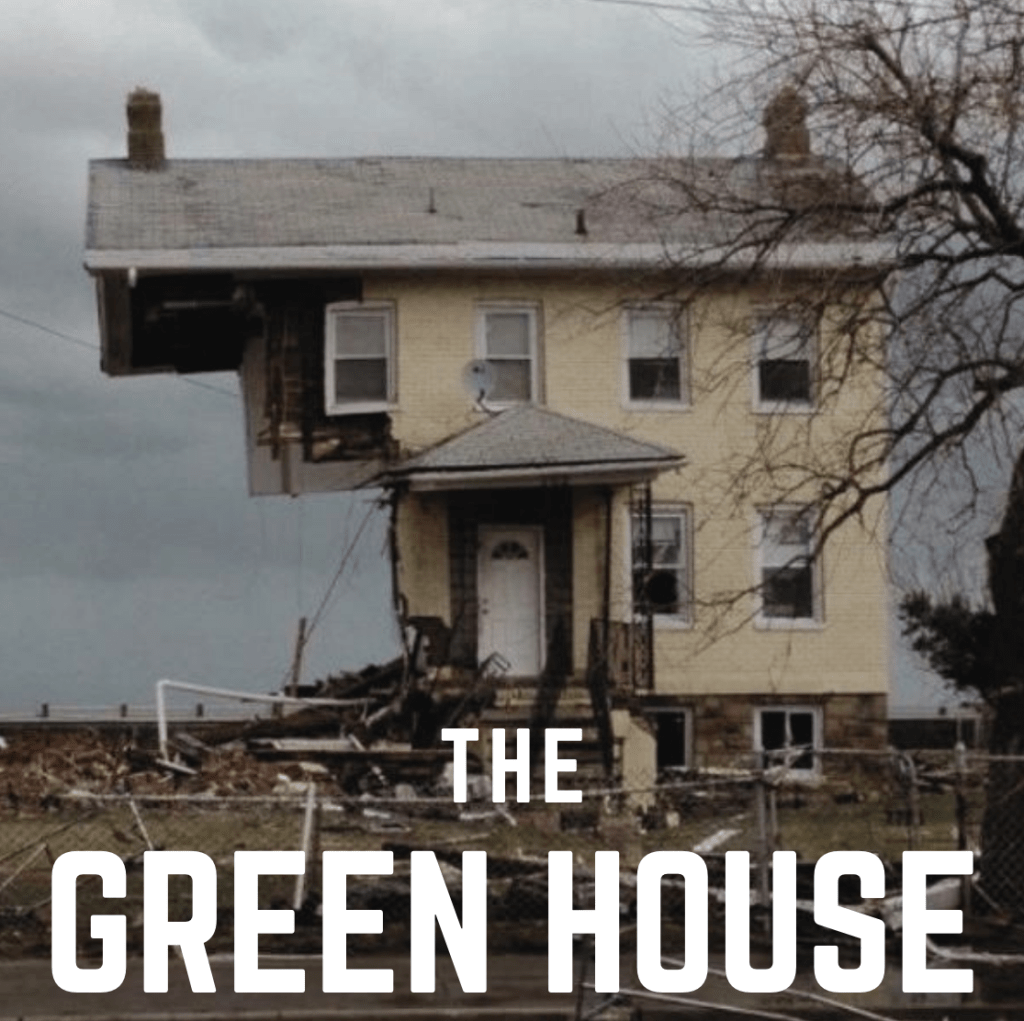
Mrs. Green worked at the kitchen table, her rhythmic chopping of potatoes adding to the room’s melody. Behind her, the high-definition window showed the sun setting over a field, a white picket fence standing quaintly in the distance. It cast hues of orange on Mrs. Green’s back.
The family sat silently before her. Billy lay on the couch, a tablet propped against his knees and Max, the beagle, curled at his feet. Kat was on the floor, her small hands working a brush through her doll’s hair. Their father sat in his armchair frowning with concentration at his laptop.
The clock over the television chimed once…twice… Mr. Green glanced up over the rim of his glasses. It chimed a third and fourth time. He closed his laptop, putting it away. Two more chimes. On its final note, the television-wall flickered to life.
“Hellooo, Fairfield!” Two figures filled the screen, almost life-sized, and four sets of eyes met them with disinterest. “It’s 7:00, on Thursday, September fourth. I’m Christine Lang—“
“—I’m Ron Bell—”
“—and you’re watching Channel 9 News.”
The camera focused on Ron, his face set in the practiced calm of an anchorman. “Oregon’s Governor Pete Blanchard is in trouble with the President for claiming air quality as a healthcare issue and funneling federal money into the state’s Clean Air Initiative. The President was scheduled to meet with Blanchard today but has postponed the trip indefinitely due to wildfires ravishing the coast and the oppressive smoke covering the region.”
Max leapt from the couch and walked to the entranceway. He pawed at the wall, whining.
“Billy.” Mrs. Green nodded toward the dog, her eyes still on her work. She emptied a bottle of sauce over the meatloaf.
Billy rolled off the couch, eliciting a yelp from Kat when he almost stepped on her doll. Head bent over his tablet, he pressed a hand to the metal wall. A section slid away revealing a space lined with artificial grass. Max circled the patch and relieved himself before darting back into the sitting room.
“Climate change was a hottopic in last night’s debate,” Christine moved on, her visage replaced with footage of well-dressed men shouting at one another.
“I’m not a scientist, I can’t—,” one started.
“You shouldn’t need a degree to recognize that we are being overwhelmed by storms and temperature shifts that are destroying crops and completely altering agricultural patterns!”
“Climate change is natural,” the first man finished calmly. “Besides, with the increasing percentage of produce and livestock being manufactured any impact on organic agriculture is inconsequential.”
Mrs. Green opened a large drawer containing three bins. Do your part! was etched along the top. She rinsed the bottle and dropped it into the bin labeled plastic.
The sun sank lower on the window screen and Mr. Green switched on another light. The generator rumbled, its chimney coughing black smoke into the gray, wet night.
“A video of a young kangaroo in Melbourne, Australia has gone viral…” The sound of her children’s laughter turned Mrs. Green’s attention to see a small kangaroo hopping playfully in a white landscape. “Australia has experienced record-breaking temperatures and snowfall this winter, but this youngster doesn’t seem to mind.”
“Looks like someone forgot to tell Australia about global warming,” Ron quipped, chuckling at his own joke. Christine responded with a forced smile.
The potatoes were added to the roasting pan and transferred to the oven. Mrs. Green cleared the table of a bowl of Canadian oranges. There weren’t many left she noted and her eyes drifted to the status light shining over the entrance. It had been red for eight days now, which meant no deliveries. They had plenty of food, but she wanted something fresh.
“Clear skies are on the horizon, folks,” Ron continued. “Walter is the sixth category four hurricane to pommel the region this summer, but it’s moving along quickly so you Singer residents should be seeing green lights by tomorrow!”
A map of the east coast filled the screen, a spinning graphic hovering over Fairfield and a projected path jutting over the ocean. Another hurricane waited idly by the Caribbean.
The orange sunset flickered. So did the lights. Then for a long couple of seconds, the room went dark and completely, utterly silent. Only the status light remained, drenching the metal walls in red, spotlighting the words “Singer Industries, Quality Safe Rooms™” over the heavy door.
Muffled pounding came from outside, then the growling rumble of the generator as it resumed its electric melody. The television turned on with a pop and the end of a jingle. A happy family sat in a room identical to the Greens’ – “Singer Industries, Quality Safe Rooms and Underground Bunkers,” a voice sang. “A structure you can rely on no matter the weather!”
Any fears of a power outage vanished by the start of another commercial. A group of men stood before a beautiful mountain-scape wearing coveralls and covered in coal dust. The miners smiled at the Green family. “Kay-Singer Oil and Coal, only the best to power your home.”
“Thank you for joining us, Fairfield,” Ron beamed as the Greens gathered for dinner, “and have a beautiful night.”
The window screen turned violet as the sun finally sank below the horizon, but beyond the steel walls, there was no green field. The sky churned, black with storm clouds. The hurricane’s rain pounded the oversaturated earth. Its high winds tore at what remained of the house, peeling away each shingle, stripping aluminum siding off in sheets. The Greens’ house was in ruins, but their Singer Industries, Quality Safe Room stood stubborn and windowless in its midst. Blind to the devastation around it as a heavy cloud of smoke billowed from its chimney into the curtain of rain.
Keys clattered against hardwood with a clang and a whispered curse. Lana fumbled, holding her half-eaten energy bar between her teeth as she bent to retrieve the dropped keys. This was typical Lana; late and scrambling out the door, calculating how to make her twenty-minute commute in half the time.
She closed the townhouse door behind her, rummaging in her bag as she hurried down the stairs. The sudden force with which she was hit sent her spinning in a confused tangle of limbs and fluttering papers then, she was falling.
Gravel dug uncomfortably into exposed skin and Lana gasped, trying to regain her breath. Another body shifted on top of Lana, groaning in pain as it tried to untangle itself from her. She lifted her head and a pair of striking blue eyes stared back.
Lana’s heart stopped. She knew those eyes, though never this intimately.
It was Dreamy McJogger. Every morning he ran past her with his high cheekbones and perfect hair. His shirt clung to his body like a second skin, accentuating the muscles underneath. He was gorgeous and Lana often found herself fantasizing about them sharing a moment.
One morning, he would interrupt his run, stop her as they crossed paths, and confess his love in a dramatic display on the corner of 8th Street. There would be flower petals drifting on a breeze, catching in her hair.
It was a silly thought, a daydream that got her through the dull moments of the morning. Not once did she ever think that it would actually happen, but now…
Dreamy McJogger propped himself up on an elbow, his sapphire eyes staring deeply into her own. He opened his mouth and Lana counted her heartbeats. Maybe her daydreams weren’t so silly. Maybe this was it…
“What the hell, lady! Are you blind?”
Lana blinked, startled.
He picked himself up from the ground with a scowl.
“Watch where you’re goin’!” Then, shaking his head, he resumed his jog.
Lana remained sprawled on the sidewalk in stunned silence, her brain slowly processing what had just happened. She was vaguely aware of footsteps approaching, then another face appeared, and a hand was offered to her.
“Are you alright?” A man asked, helping her up.
“Yeah,” she said, bending to collect her things. “I’m fine.”
She was, of course, not fine. She was utterly mortified.
Her energy bar sat in a puddle of dirty water. Lana picked up her breakfast with two fingers like it was something disgusting, which now, it was…
The man stooped to help, reaching for her phone where it lay at his feet. “What an asshole, huh?”
Lana glanced up to see warm brown eyes and a sympathetic smile, but quickly looked away, too embarrassed to hold the man’s gaze. “Yeah,” she mumbled, heat rising in her cheeks.
He handed her the phone.
“Sorry about your breakfast…” He was smiling at her with concern. Lana kept her head down but she could hear it in his voice. “You’re sure you’re okay? It looked like you came down pretty hard.”
Lana readjusted her purse on her shoulder and looked down the block. Her eyes were starting to sting with tears which only soured her mood even more.
“Yes, I’m fine. Uh, thank you,” she sniffed, casting him another glance. “I appreciate your help.”
The man barely managed a “Don’t mention it!” before Lana hurried away, desperate to get as far from this place as possible and hoping the humiliation wouldn’t follow.
Lana slowed outside Bridals by Juliet, pulling a compact from her purse. She checked her reflection, quickly touching up the make-up under her eyes and trying to rearrange any loose strands of hair in the small mirror. She was late for work the moment she left her house; what was a few more minutes if it meant walking in looking at least slightly more composed?
Taking a deep breath, Lana closed the compact with a click and dropped it back in her bag before reaching for the door.
The other consultants were standing about the showroom, a few sitting together on the plush white couches and armchairs. Lana hurried past them, smiling to a few as she made her way to the back. A tall, slender woman with dark hair, cut sharply to her chin, was leaning against the counter in the break room, a cup of coffee in her hand.
“You’re late,” she said as Lana came up beside her and dropped her bag on a chair.
“Have I missed anything?”
“Yes.” Renée turned, taking a schedule from the counter, and holding it out to her friend. “Lucky for you, Pauline’s been with alterations all morning taking care of a rush order. So, I was in charge of the lineup.”
“Thank God,” Lana sighed, reaching for the schedule. The last thing she needed was Pauline on her case for being late.
“Lana!” Renée closed her hand around Lana’s wrist and turned her arm. Large scrapes ran down her arm. A dusting of dried blood and gravel still stuck to her elbow. “What happened?”
Brushing the gravel from her skin onto the clean white carpet, Lana let out a groan. “I need a drink…”
“Already?”
“It’s been quite a morning…”
The white fabric flowed through Lana’s fingers like water, shimmering as she let it fall gently to the floor.
“This looks beautiful on you,” she said, her fingers working the trail of buttons up the woman’s spine. The bride-to-be smiled; her face flushed with excitement. “Would you like to go out and show them?”
Lana followed close behind, carrying the long train to the showroom. A chorus of gasps and exclamations of awe rippled through the group awaiting them on the overstuffed sofa.
This was the dress. Lana knew it as soon as the woman saw herself in the mirror. Now, there were tears in her eyes and a wide smile on her face as her loved ones sang hers and the dress’ praises.
But Lana’s mind was already wandering, carrying her away to an old cathedral, the stained-glass casting rainbows on her gown as she made her way slowly down the aisle.
Or no! A tropical island, the warm sand between her toes, and a light sea breeze picking up the soft folds of white chiffon.
Or perhaps it would be something simple, an outdoor ceremony with a wildflower bouquet. She would look up wistfully from behind her blusher veil, making her way toward the tall, devastatingly handsome, faceless man awaiting her at the altar.
Lana struggled against the disheartened sigh that threatened to escape. There she was again, getting lost in a whirlwind romance with a man who would only ever exist in her daydreams. She was a hopeless romantic, Lana knew that, but recently, that seemed to be more trouble than it was worth.
Day after day she made sure her hair was done, her make-up perfect, always looking her best for some stranger she passed on the street who wouldn’t even look her way. Yet she had imagined a life with him, what his name was, where he worked, where he would take her on their first date.
And it wasn’t just Dreamy McJogger; it was the man in the three-piece suit she saw on the subway most Thursdays after yoga. It was the young flower shop owner around the corner, who had single-handedly turned Lana into a plant enthusiast after he complimented her daisy-printed skirt.
Who was she kidding? She wasn’t a hopeless romantic.
“I’m delusional…” she thought.
A celebratory cheer pulled Lana back to the showroom and she beamed at the woman standing beside her as she made her decision.
“Congratulations,” Lana said, helping her step down from the pedestal. “Let’s get you out of this gown and then we can put in your order.”
She loved working at Juliet’s, helping countless brides find the dress of their dreams, hearing about their fairytale romances, living out her fantasies vicariously through them. But some days, the forest of white and tears of joy only reminded her of how unlucky she was in love.
Jax needed to take time to “focus on his career”; Drew turned out to be a drug addict; and Ali swore that a long-distance relationship would work — but of course it would when he had another girl waiting for him when he got off the plane. An exhausting amount of first dates and only a handful of seconds. All beautiful faces with commitment issues.
She could fill volumes with her dating nightmares. Like the time her blind date turned out to be her sociology professor, whose class she had just that morning. Or the time she spent an afternoon in the ER after her date pissed off a swarm of bees during their picnic.
Advice was thrown at her from every direction, often unsolicited.
She shouldn’t try so hard. She needed to put in more effort. She wasn’t looking in the right places. Try this dating app. No, try this one! Don’t date online. Don’t be so picky! Don’t settle…
Lana watched as her last appointment left the boutique, still smiling and waving thanks to Lana over her shoulder.
How could it be this hard to find someone?
“You still need that drink?”
Lana turned to see Renée leaving the break room, her purse already on her shoulder.
“Dear God, yes!”
Her friend offered her a sympathetic smile. “Go get your things, I’ll wait outside.”
Lana hurried to the back, the promise of wine therapy already cooling the embarrassment that lingered with each thought of her morning.
“I told you he was probably a jerk.” Renée lowered her empty glass and poured another, topping off Lana’s as well. She made a face of disgust. “He was always checking his reflection in windows.”
Lana whimpered into her hands. Despite her wishful thinking, the Chardonnay was doing nothing to lift her spirits.
“I have never been more humiliated in my life,” Lana groaned, lifting her head. “And there were witnesses! Some guy saw the whole thing, helped me pick up my things…”
“Oh, well thank goodness, there’s at least one decent human being left in the world.” Renée sipped, her red lipstick staining the rim of the glass. Lana stared at it, lost in the rich color, dreaming of falling rose petals. She pouted.
The white noise of conversation drifted around them, mingling with street sounds of the city and the pedestrians that passed their table. Everyone going about their lives, enjoying their perfectly normal day with zero incident. Lana doubted any of them had made a fool of themself today.
The sympathetic smile returned to her friend’s face. She was getting too many of those today. “Don’t worry, doll,” Renée said, rubbing Lana’s arm. “Eventually you’ll look back on this and laugh. I promise.”
“I don’t want to laugh! I’m tired of my love life being a long-drawn-out joke. Every date I go on is just one more punchline…”
She raised the glass, tipping it back. The wine burned slightly as it went down her throat making her grimace. “I should just come to terms with the fact that I’m going to spend my years all alone.” She stared off at nothing, frowning. “Maybe I’ll get a cat.”
Renée chuckled, but took Lana’s hand and squeezed it comfortingly. “You’re not going to end up alone, I promise you. One day, a sweet, funny, respectful,” she nodded her head for emphasis, “very good-looking man is going to fall right into your life. And it might be smooth and effortless or clumsy and difficult, but it will be perfect. As long as you’re happy. Besides. You don’t even like cats.”
With a final squeeze, Renée let go of Lana’s hand and threw a few bills on the table. “I’m sorry, hon, but I have to head out. Dave and I are having dinner with my parents tonight.”
She stood and kissed the top of Lana’s head.
“Don’t get so lost in your head,” she said. “That’s a dangerous place to wander alone. I’ll see you tomorrow.”
Lana watched her friend disappear among the other pedestrians and frowned. Dave was planning on proposing. Not tonight, but soon. He even showed Lana the ring.
Another friend soon-to-be happily married. Lana gulped her wine.
It was a beautiful day, though a bit warm for this hour, and the cafe’s outdoor seating was filling quickly. She should probably leave; give up the table she now occupied alone with her wine glass. She was sure a happy couple would love this view of the park…
Instead, she watched the people hurrying past her, the sidewalk bustling with energy.
A couple passed by, the man smiling at the woman on his arm looking utterly charmed. Lana took another long sip.
The wine was starting to taste bitter.
She rubbed her scraped arms and let out a defeated sigh. Love had clearly given up on her.
“Bad day?”
A man stood by her table, just on the other side of the iron rail that kept pedestrians out of the dining area. Lana squinted up at him against the sun. He was tall and well built, the sleeves of his dress shirt rolled up against the heat. His dark hair was brushed back revealing a pair of brown eyes that held a comforting warmth. Something about him seemed very familiar but Lana leaned cautiously away.
“I hoped it would get better after that tumble you took this morning.”
Sudden realization flooded Lana, coupled with a new wave of humiliation. Her horrified expression was met with a chuckle and the same sympathetic smile she had received from him earlier that day.
“Sorry, for bringing up any bad memories… The wine must be helping at least a little, though. Right?”
“Hardly…” she said, eyeing him skeptically. This man had witnessed her literal downfall that morning. It never crossed her mind that she might see him again, now he was like a walking reminder of her embarrassment.
“I’m realizing that we’ve never officially met,” the man continued, extending a hand to her. “I’m Kevin. Moved here a few months ago. You walk past my apartment every morning. We’re practically neighbors, just a few houses down.”
A new sense of familiarity dawned on her as she took the hand he offered and shook it. “Lana. You’re the house with the purple door.”
“That’s me. A bold choice, I know. All of these townhouses look the same, figured it would help me remember which ones mine.”
He smiled with a warmth that touched his eyes and Lana was surprised to feel her own lips turn up slightly in response. He had a small dimple on his right cheek.
“Sorry if I’m interrupting…” He gestured to the table but Lana waved away his apology.
“I was just about to leave. Are you walking home?”
“I am.” Kevin looked off in the direction of their street and the sun turned his eyes to rich honey.
“Mind if I walk with you?” Lana could have kicked herself for asking, but the words had tumbled out without much thought.
“Not at all,” he said.
The conversation was light as they walked, mostly sharing the basics of their lives. Kevin had moved from the Midwest, he worked in the accounting department of a large pharmaceutical company. Lana told him about Juliet’s and how she, very recently, is in the market for a cat. Then, somehow, Lana found herself sharing the countless other embarrassing situations she had experienced over the years which, in hindsight, made being knocked down by a man, pale in comparison. Kevin’s laughter warmed her as much as the evening sun, the dimple in his cheek appearing whenever he smiled at her. But when they reached her door he hesitated.
“I have something for you,” he said, almost cautiously.
Whatever the face was that Lana made, it pulled an embarrassed chuckle from Kevin’s lips.
“I keep a box of these in my desk at work,” he continued, reaching into his bag. “Figured I’d take one with me on the off chance I saw you. You know, to replace the one you lost this morning.”
He was holding an energy bar, the same kind she had lost in a puddle when Jerkface McJogger knocked her down. “Turns out we have similar taste.”
Lana smirked, taking the energy bar from his hand.
“Well, what do you know?” Then, she added a quiet, “Thank you.” Though she wasn’t sure if she was thanking him for this morning, or for right now.
“You’re sure you’re okay?” he asked, the smallest hint of concern in his eyes. “That was a hard fall.”
His hands were deep in his pockets and there was a bashfulness in his expression that made Lana smile.
“Yes,” she said. “I’m very okay.”
He nodded. “I’ll see you soon?”
“I’d like that.”
With the promise of a future meeting, Kevin left with a satisfied smile.
Her elbows were scratched, her palms still burned, and she was pretty sure she had bruised her tailbone. But as Lana watched her neighbor climb the steps to his townhouse she began to realize, maybe it doesn’t have to hurt to fall for someone.
There was once a Farmer and his Wife. Bright and in love, they lived on a small farm where their gardens abounded with fruits and vegetables and the soft colors of wildflowers. Wheat swayed like golden waves, cornstalks shivered in the morning breeze, and honeybees pirouetted among the blossoms. The earth was bountiful, and the young couple wanted for nothing except a child. But that, Mother Earth could not provide.
Spells and wishes were things of antiquity, the Old Magic nearly forgotten. Still, the couple hoped; and as she tended the fruit trees, the Farmer’s Wife whispered to the dawn.
“Please,” she said, “if any magic remains in this world, let it bring us a child; a sweet, little thing with a spirit free as a swallow, and a heart warm as summertime.”
As the Farmer’s Wife returned to her chores, the Sun poked his sleepy head above the blanket of mist. Slowly, his rays reached out like long fingers, waking the Earth, and telling her what he had heard.
Later, the Farmer’s Wife parked her bicycle outside Bean Sprout Co-op. She took the apron from her bike’s basket, tying it around her waist. Warm hellos from coworkers greeted her and she was soon busy organizing produce from local farms.
Suddenly, a loud clatter came from behind the building. Concerned, the Farmer’s Wife hurried toward the sound.
An Old Woman dressed in a green frock frowned at the mess surrounding her worn, black Wellington boots. Her cart, piled high with seedlings, had toppled over, scattering black-brown earth onto asphalt.
“Dutchman’s breeches,” the Old Woman cursed.
“Let me help,” said the Farmer’s Wife, righting the cart.
“Thank you, dearie!”
A grateful smile flashed under the brim of her battered straw hat. She had darkened skin and calloused hands creased with earth. Her frizzed white curls were tied with torn linen.
“This old thing,” she rested a hand on the cart, “is as ancient as I am and about as agile! Its wheels went right out from under it!”
The Old Woman laughed so heartily it made the Farmer’s Wife smile.
When the seedlings were back in their place, the Old Woman reached into a pocket.
“A gift of thanks,” said the Old Woman, placing something small in the Wife’s hand. “For your first of three.”
The Farmer’s Wife stared down at the single pea, confused. Then a wrinkled hand took hers, closing it around the seed.
“For the truest happiness,” the Old Woman pulled her closer, “continue to prove your kindness.”
Then, she released her, shuffling away with her cart, leaving the startled Farmer’s Wife staring after her.
The long workday ended, and the Farmer’s Wife returned home. At the front gate she stopped, planting the tiny pea in a patch of sunbathed earth, and soaking it with water. Muddy fingers touched earth.
“Grow strong, little one.” Then she continued onward, the trembling mound going unnoticed.
The next day, the couple worked through the morning, and soon the Farmer’s Wife was walking her bicycle to the road. At the gate, she found that her little pea had grown! It was full and green, standing nearly a foot tall, its tendrils coiled tightly around the gatepost.
Dumbfounded, she watered the plant and cycled to Bean Sprout Co-op.
The Farmer’s Wife settled in for the long hours of a busy day. She helped customer after customer, until she began to grow weary. Her shift ended with fatigue and an aching back but as she mounted her bicycle, she noticed a mother struggling with groceries and three small children.
She hurried over, helping to carry the heavy load. The mother thanked her, brushing fair curls from her exhausted face, as the children waved cheerily from the car.
At last she approached home, and even at a distance she could see the pea plant had grown. Despite her exhaustion, the Wife tended to the plant, whispering words of encouragement.
On the third day, the Farmer’s Wife arrived early to Bean Sprout, hoping to find the Old Woman. Vendors filled the parking lot, unloading their hauls, white feathers from the caged laying-fowl tumbled across the ground, but the Old Woman wasn’t there.
The co-op was bustling with shoppers when a young woman, sun-kissed and very pregnant, stood at check-out. Light hair covered the flush of embarrassment as she frantically searched her purse, the line growing behind her.
The Farmer’s Wife rested a hand on the expecting mother’s shoulder. She smiled, reassured her, and took out her own wallet. Tears streamed down the woman’s face as she thanked her; the Wife insisted it was nothing.
The journey home was difficult in the midday heat, but the Wife felt happy. When she arrived, she found the Farmer standing in awe before the pea plant where a single peapod shook on the vine.
The Farmer’s Wife plucked the peapod. It jolted, then split open revealing a pea-sized baby. The couple stared in disbelief at the child. They knew not how this was possible, but they knew that she was theirs. The Mother carried her child carefully to the house.
The infant slept on rose petal blankets and tufts of cotton, but she grew quickly. In weeks, she was the size of a human baby, and soon she was a beautiful girl with hair the rich brown of earth and eyes, a bright green.
One afternoon, as the little girl danced barefoot through the wildflowers, an old woman appeared at the gate. She wore old, black Wellingtons and a green frock, her white curls were tied back beneath a straw hat.
For a moment, the pair watched each other. Then, the Sun’s rays reached past the Old Woman, moving along the grass until it touched the girl’s face, making her giggle.
“Lunchtime, sweet pea!”
The girl turned at the call, running back to her home. She was free-spirited, with a heart like summertime, and she was learning to always be kind.
The Old Woman glanced behind her, a smirk on her lips, and winked at the setting Sun.
Frozen air pulled each breath from his lungs with a painful rasp. The canopy above blocked the moonlight, blinding him as he ran. If he could just reach the road, he might find help.
The sounds of pursuit grew louder and panic clouded his mind, threatening to overwhelm him. His toe caught a fallen branch and he faltered, his hand scraping earth as he fought to keep his footing. Adrenaline propelled him onward, but the stumble cost him precious seconds. Death nipped hungrily at his heels.
He needed to reach the road.
Pain tore suddenly through his thigh and he crashed to the ground, his mouth filling with dirt and leaves. He lashed out, kicking into the darkness, trying to drag himself away. More pain bit into his shoulder, pinning him down and ripping a scream from his throat. Hot breath licked his neck, before Death’s jaws closed around him.
Leonard Wallace was a good man. Patient and fair, his dedication to public service made him a trusted representative. He was what a politician should be, which was, perhaps, why he never ran for office. Instead, he served as Bloomfield’s Borough Manager, inspiring positive change within months of his appointment.
Now, police swarmed the Mayor’s Office, speaking to staff in hushed tones, collecting statements.
Jacqueline watched from her desk, wrought with anxiety. Leighla had called early Saturday morning, sounding frantic; Leo had never come home from work. Forty-eight hours later, Jacqueline and Leighla were at the police station, filing a missing person’s report.
Her mind hadn’t stopped racing since, searching for some forgotten detail that might prove helpful.
Recently, Leo had seemed…stressed. He and Leighla were deep into their wedding plans, his mother’s cancer had relapsed, and he had been speaking more and more openly about his dissatisfaction with Bloomfield’s leadership. At least, he was speaking more openly about it with Jacqueline.
Leo was becoming disillusioned with the local government, tired of hitting so many unnecessary obstacles. In his most frustrated moments, he admitted that maybe, he just wasn’t cut out for Borough Manager.
Jacqueline thought back to those conversations, to the exhausted look on Leo’s face. The job was overwhelming him, but he wouldn’t just run off…
A pair of voices echoing up the marble staircase announced Mayor Cross’ arrival. He entered the office wearing a perfectly tailored suit, his silver hair combed neatly to the side, and a somber expression that turned down his mouth and pinched his brows. He was speaking with a detective Jacqueline recognized from her time at the station. The men passed her desk without even a glance, walking directly to Cross’ private office and closing the door behind them.
Jacqueline’s eyes lingered on the closed door. Leo was missing. Her thoughts were on him and his safety, and she imagined Mayor Cross’ were as well. But she also knew the world of politics; Cross would want to keep this quiet if he could. A missing public official would be quite the scandal.
Desperate for a distraction, Jacqueline turned to her computer. She needed to keep her mind busy, otherwise she was susceptible to falling into a dazed fit of anxiety. She opened her email and relief washed over her as she read Leo’s name at the top of her inbox. He had contacted her – he was safe! She was ready to burst into Cross’ office, to call for the detective, when she noticed the timestamp.
Friday, 5:38 p.m. Minutes before Leighla last heard from him. Dread settled in again as she opened the email.
Subject: Just in case
Jackie,
I’ve left you something important. Please understand.
Always,
Lenny
No one called him Lenny, not even Jacqueline. It was a teasing reference to when she was too young to pronounce Leonard. They only ever used it when poking fun at each other, and certainly never used it in the office, where they attempted to keep their family history private and avoid accusations of nepotism. To read the endearment now, frightened her. It felt somehow like a goodbye.
She wrenched open her desk drawer, the dread she felt now making her nauseous.
Leo occasionally left “gifts” in her desk – birthday presents, a save-the-date – today there was an envelope. It was heavy and as she unfolded its contents, a gold whistle with a blue ribbon attached fell to her desk.
Jacqueline recognized the dog whistle. It was a trophy from some hunting dog competition and usually sat on Cross’ bookshelf. The page she unfolded was a transcript of Cross’ interview regarding a series of rallies protesting a new shopping center where the community center currently stood.
A quote was highlighted.
“They see this as an encroachment of government, but it is an opportunity to bring jobs and commerce to the inner districts, to lower crime rates. [The counter-protesters] recognize this, they want what will improve their community…”
Leo’s scratchy handwriting filled the margin.
Chpt 30A Redevelopment Authority §30A-5
Ordinance 6-2020. Find it.
Jacqueline stared at the note, confused.
“There is no Ordinance 6-2020,” she mumbled, turning her attention back to the dog whistle.
Suddenly, Jacqueline remembered a late-night conversation from months earlier. Leo was heated. He had met with the council to discuss a petition to renovate the community center now targeted for demolition.
“Their anti-immigrant sentiment is becoming outright obnoxious” he told her, sitting on Jacqueline’s couch with his third beer. “They don’t even bother hiding it in the council meetings anymore and yet they step out into the public for their photo-ops and suddenly they’re the ‘voice of the people.’ They just don’t let on that they only care about the voice of a select few people.”
He threw his head back, draining half the bottle in a couple of gulps.
“I can’t stand dog-whistle politics,” he growled. “Even if you’re able to decode their true intentions, it’s almost impossible to incriminate them!”
Jacqueline’s eyes moved back to the page and reread Cross’ words, the whistle heavy in her hand.
Laughter erupted from Cross’ office, the sound so jarring and misplaced, it made Jacqueline jump.
“—best bitch I’ve ever run!” Cross was chuckling as he opened his office door, his somber expression long forgotten. Jacqueline slipped the dog whistle onto her lap, out-of-sight.
“I never took you for a hunting man,” the detective said, smiling broadly. “What do your dogs hunt?”
“Coons, mostly. Mind you, my Plott Hounds can take large game down at the call of a whistle.”
“You’ll have to come out with me and the boys, once the season starts.”
“I look forward to the invitation!” Cross held out his hand and the detective shook it.
The detective smiled at Jacqueline as he approached her desk.
“Ms. Palmer,” he said, nodding. “Thank you again for your cooperation yesterday.”
Jacqueline nodded silently in return. She watched as he left the office, his footsteps echoing quietly in the stairwell, but she could feel Mayor Cross’ eyes on her. Swallowing the dread that still churned her stomach, Jacqueline turned to meet his gaze.
Cross was still standing in the doorway to his private office, his hands buried deep in his pockets. For a moment, he just stared at her, an inquisitive look in his eyes. Finally, he turned slightly away from her.
“Ms. Palmer,” he said.
“Yes, sir.”
“Contact my three o’clock and see if he’s willing to meet before lunch. I’ll be leaving early today.”
“Yes, sir,” Jacqueline said, but Mayor Cross had stepped back into his office, closing the door behind him without waiting to hear her response.
Two days passed, and Leo was still missing. People were beginning to suspect the worst; Jacqueline was trying to accept it.
She needed to know why.
Chapter 30A Redevelopment Authority was easy to find. It outlined an initiative to improve Bloomfield’s underdeveloped areas. Ordinance 6-2020 still alluded her.
She had exhausted her search at work and still had no answers. That’s why she found herself standing in the darkness of Mayor Cross’ home office.
Jacqueline knew he had a late dinner scheduled, giving her plenty of time to search, but she hardly needed it. The ordinance was in the top drawer, among dozens of proposals from retail and luxury housing developers. Jacqueline scanned the pages in the light of the desk lamp, then she found the blueprints.
“I never expected Wallace to share his suspicions. Let alone with my secretary.” The voice cut through the dark silence of the office, tearing Jacqueline’s eyes from the paper. “Granted, I didn’t know the two of you had history.”
Cross stepped from the shadows, the dim light accentuating his look of disdain. What was he doing here?
“Your crackhead mother was charged with child negligence when you were barely three; you spent a year in the system, moving from home to home until Wallace’s parents took you in. They were your last foster family before your grandparents obtained custody. Did I get that all right?” He took a few steps closer. “I imagine Lenny was a perfect big brother. How nice of the family to maintain a relationship with you all these years.”
Jacqueline’s mouth was dry, her heart racing almost painfully. She hardly cared if Cross knew her past now. She clutched the plans to her chest.
“You’re going to demolish one of the highest immigrant-populated districts in the borough.”
His hands slid deep into his pockets. “I’m pointing Bloomfield toward a more prosperous future.”
“Thousands of families will be forced from their homes—”
“Most of them aren’t here legally,” Cross said with a shrug, “are the homes truly theirs?”
His words hit her like a physical blow.
“You can’t do that…”
“Yes,” Cross looked to the window as if recalling something. “That’s what your ‘brother’ said. Threatened to go public and reveal my evil scheme. He wasn’t pleased to learn that the council already approved the plans.”
Cross turned back to look at Jacqueline. He removed a small object from his pocket, sighing. “Such a shame he dragged you into this.”
Fear almost choked her, and she felt sick. “What did you do to Leo?”
“Nothing that wasn’t in my right,” he said with a smile. “Mr. Wallace was trespassing when he came to confront me.”
The object glinted as he touched it to his lips. “Much like you are, Ms. Palmer.”
Mayor Cross lowered the dog whistle. There was a pulse of silence before Jacqueline heard several sets of paws scraping against tile and hardwood. Somewhere a hound bayed, then another. Then, Jacqueline ran.
The frozen air stole a gasp from her lungs as she burst into the night, sprinting toward her car. Two more dogs forced her to change course and she ran for the trees, panic clawing her throat as the panting hounds gained on her. Cross’ estate was massive, but if she could just reach the road, she might find help. She urged her feet to move faster.
I should have known how this afternoon would unfold as soon as I arrived at Barry Harbor. Any sea-faring vessel called Titanic is most likely doomed just on principal; the Universe doesn’t care if someone’s painted the word Tiny in front of it.
“That’s a big boat,” I mumbled to myself, taking it in. Tiny Titanic looked nothing like its namesake, mainly because it was a 21st-century yacht and not a passenger ship from 1914. Global warming had largely taken care of any threat of icebergs, but I was still uneasy. I’m not a fan of sailing; nowhere to escape when you’re completely surrounded by water. Which is probably why Samantha planned it this way…
For whatever reason, my sister-in-law, Samantha, had made it her life’s purpose to get me hitched.
“Doug Daly, you do women an injustice by staying single,” she told me. “Go forth, and share your sexiness with the world!”
Those may not have been her exact words, but she did tell me I was ‘Daddy material,’ so I think you get the gist. Despite repeatedly insisting that I am neither ready to be a father nor a ‘Daddy,’ Samantha followed her own agenda and set me up on a blind date. So, here I was, standing at Barry Harbor, because my sister-in-law is relentless and I am a pushover.
A beautiful blond woman waved excitedly from the deck, calling my name. I assumed correctly that it was Bethany, Samantha’s latest candidate. She looked like a Marilyn Monroe impersonator, bleached curls, a slim waist and huge…lips. I waved back with a forced smile.
“Yer treading dangerous waters, boarding that girl,” a gruff voice said from behind me. I spun around to see an old sailor. Gray scruff covered his tanned face and he wore a sun-bleached skipper’s cap.
“O-oh, I’m not planning on boarding any girls, sir,” I replied, panicked. “I’ll be on my best behavior.” I raised two fingers to my head in salute.
“The capt’n brought her in from the bay, plans on headin’ up river,” he continued, ignoring me as he stared up at Tiny Titanic. “Tried tellin’ ‘im the bed’s too shallow; keel’s gonna drag.” He turned to face me. “If yer capt’n don’t mind the river, yeh might end up takin’ a dip.”
With a toothy grin, he headed back toward his small fishing boat.
I turned back to the yacht, looking it over. A mysterious seaman just warned me not to board a boat named after the Titanic – was it too late to cancel the date? I reached into my pocket and pulled out a large gold coin.
“Heads I bail…” I said, flipping it in the air. I caught the coin and slapped it on the back of my hand. “Dammit…”
I had a sinking feeling about this.
The date was going about as well as I expected, so not great. Bethany was…friendly. Her Marylin impersonation made a hard stop at her drawn-on mole and I honestly couldn’t tell you if that was a relief or a disappointment.
She laughed at all of my jokes, which is always nice, but even I could tell she was laying it on a bit thick. She was very vocally impressed with my physique. Apparently, she had expected a “Dad Bod”. I wasn’t sure what that meant, but I was beginning to question whether I was being complimented or falling victim to some twisted Electra Complex.
Her hands seemed capable of only holding her champagne glass and sliding up my thigh. We were halfway through the all-inclusive-charter charcuterie when she explicitly told me how much she loved “big meat”; which was, you know, not at all subtle.
There are plenty of reasons why I’ve taken a prolonged break from dating; the fact that women like Bethany terrify me, is just one of them. Eventually, I excused myself to go hide shamelessly in the cabin. It was smooth sailing from there; until Bethany started getting friendly with Captain Richards.
The cabin was nice and lightly furnished, so it didn’t take long to snoop around. I gave the bed a wide birth, just in case Bethany found me and got the wrong idea, then settled in an armchair near a porthole. I fished my gold coin out of my pocket and lifted it to eye-level.
“You know,” I said to the eagle printed on the coin, “you don’t give the best advice. I’m starting to doubt whether you’re even lucky…”
Then the yacht jolted violently, throwing me and my unlucky coin to the cabin floor. An ear-splitting screech echoed through the room before Tiny Titanic let out a satisfied groan and settled into the riverbed.
I pushed myself up onto my elbows and that damned eagle stared back at me. Fairly confident that my earlier statement had just been validated, but more terrified that the Powers-That-Be were trying to prove some sort of point, I pocketed the coin once more. Then, lifting myself from where I fell, I lunged for the doorway, staggering against the steep pitch of the yacht as I sprinted toward the stairs. When my foot sloshed against wet carpet, I stopped. At the end of the hall, I could see water seeping from a gash in the wall. That couldn’t be good.
I took the stairs two at a time and found Bethany and Captain Richards looking disheveled and interrupted.
“What was that! A tiny iceberg?”
“No need to panic,” Richards said, tucking his shirt into unbuttoned pants. “It seems we’ve run aground. We’ll just need a tow. I’ve already radioed an SOS.”
Sirens were sounding everywhere.
“The carpet’s soaked below deck,” I told him.
“Mmm, I know,” Bethany bit her lip, cozying up to Captain Richards.
The captain blanched. “There’s water?”
Before I could respond, the bosun came running. “Damage to the hull! We’re taking on water in the bilge!”
Adrenalin hits everyone differently. Captain Richards jumped into action, doing his job instead of my date; Bethany’s blood seemed to rush somewhere other than her brain; and I entered full flight-mode.
While the crew tried to reach the tender boat, I searched for the shore. How long until help arrived? Tiny Titanic was sinking and I wasn’t a strong swimmer; I’d never make it out of the water alive!
“I have bad news,” Captain Richards said, when he returned. “The tender was damaged in the snag. We’ll have to wait for help.”
Bethany gripped my arm with something not resembling fear. “Oh, Doug, isn’t there something you can do!” She pressed her hips against mine.
I gasped, and pushed away from her, but it wasn’t because of her untimely attempt at seduction. I had noticed something just over her shoulder. “There’s another boat!”
Maybe it was the fear of dying with Bethany and Richards in a weird threesome, but whatever the cause, hysteria hit me hard.
As soon as I saw the small rowboat in the distance, slowly paddling its way toward us, I ran to the rail like a madman and, without a second thought, threw myself into the water.
I swam as best I could until I reached the rowboat. The old sailor smiled down at me.
“I warned yeh’d be treading dangerous waters!”
“I don’t wanna be treading any water!” I sputtered, splashing.
The sailor laughed as he gripped my shirt and hauled me into the boat. He changed course, heading toward the old fishing boat in the distance as I settled on the bench. I doubled over, resting my elbows on my knees as I tried to catch my breath.
You know that saying, out of the frying pan, into the fire?
I watched the water pool around my feet.
“Now, I’m no expert, but I’m pretty sure the water’s supposed to be on the outside of the boat.”
The sailor’s smile brimmed with ill-placed humor. “Yeh learnt that from experience, skipper?” he asked, his body rocking with each pull of the oars.
The water was seeping into my shoes, not that it mattered; I was already soaked from my impromptu swim. I pulled my shoes off, then yanked at my socks, letting them fall to the bottom boards with a splash. The old sailor laughed.
A small bucket bobbed up to me, bumping against my foot in the flooded boat’s bottom.
I reached back into my pocket and pulled out the gold coin. “Heads I bail…” I said, flipping the coin. With a sigh, I reached down for the bucket and began emptying the water from the boat’s hull, as the old sailor leisurely whistled a shanty.
Many lessons had been learned. One, don’t put too much faith in a lucky coin. Two, never let your sister-in-law set you up on a blind date. The old sailor’s shanty turned into something resembling “My Heart Will Go On.” And three, never board a boat named after the Titanic when looking for love.
Braern closed the curtains, shielding the glow of fairy lights from the world beyond the window. Absentmindedly, he ran his fingers along the length of his pointed ear, tugging at the gold rings that pierced his skin as he listened to the silence. Few traders came so far north during High Winter, even fewer travelers, yet the shop remained open, ready to serve those who knew what to ask for.
Perching himself on the stool behind the shop counter, Braern took up his whittling. The earthy musk of oil and stale death hung in the air like the furs hanging for sale around him. Across the room, Shasha wordlessly transformed scraps of fur into gloves. Unlike Braern’s broad, mountain frame, his niece had inherited the willowy limbs of her woodland father. Her eyes, however, were the steel-blue granite of the mountain clans.
Braern’s ear twitched at the sound of distant footsteps but he kept his head bowed to his work until fairy lights danced in the gust of the opened door. Two cloaked figures lowered their hoods to the shop’s warmth.
The man was tall and visibly strong. His hair fell in dark waves around a tanned, weathered face. The woman was his opposite. Thin and delicate, her sand-brown hair seemed caught in an endless sea-breeze. Her eyes shimmered with the dangerous beauty of sun-lit oceans.
Braern could see through their glamour. A mother-of-pearl opalescence accentuated the female’s cheek bones and small scars, barely visible above the man’s collar, was evidence of closed gills. The presence of sea-dwellers this far inland was unsettling enough but then Braern noticed the brooch. An elegant lobster, carved from blue coral, adorned the female’s cloak – the mark of the Dominant Lord of the Eastern Seas. She was a sea-sprite, claimed and mated to the King. Braern frowned.
“Welcome, travelers.” He stood, bowing his head in greeting.
The man stepped forward and Braern eyed him closely. Only a triton would be so confident this far from the sea. His ability to maintain both his and the sea-sprite’s glamours served as testament to his power.
“We hear you carry northern trappings.”
Braern’s frown deepened at the coded words.
“We don’t trap during High Winter,” Braern said, bluntly. “Come back in the sunny seasons.”
He made to resume his whittling but the triton reached for the wood block, halting him. “You are our only option.”
Braern looked over the pair. For nearly a decade, he and his brother-in-law, Ievos, had safely and discretely guided beings through the Spire Mountains. There were safer paths westward, but none more direct. Only those desperate for escape risked it.
The sprite’s eyes reflected fairy lights as she met Braern’s gaze, reminding him of the stars reflected in the eastern seas. He wondered how desperate she must be.
“Shasha,” he called, but the girl had already joined him at the counter. “Go call your father. Tell him we’ve an order.”
Shasha’s granite eyes assessed the travelers before settling on her uncle. At his reassuring nod, she collected her cloak and stepped into the cold darkness.
“I thank you, sir,” the triton began, but Braern stopped him.
“I have agreed to nothing.” He wiped wood shavings from his knife and sheathed it at his hip. “The Spires are dangerous under the best conditions, to go now would guarantee death. No northern trapping is worth my own hide.”
The sprite’s hands fluttered urgently.
“Saida,” the triton chided, gripping the sprite’s wrists. “He cannot understand.”
Saida set Braern with a disbelieving gaze. Ignoring her companion, she pulled her hands away and reached for Braern’s face. Her slender fingers touched the gold ring piercing his brow – the brand of a seaman.
As an adolescent, Braern had traded his mountains for seafaring. He spent hours watching the sea-sprites from deck, their fins and tails rippling the water in a mesmerizing ballet of unspoken communication. Years had passed since he last read a sea-sprite’s movements and the limitations of only two hands left Saida signing broken, unintelligible sentences. He shook his head and lowered Saida’s hand from his face.
“That was long ago.”
“I beseech you,” the triton said. “We cannot dwell on land much longer.”
He wanted little to do with a claimed sea-sprite. No doubt someone would come looking for her, and Braern couldn’t afford attracting the attention.
Still, he could already hear his sister scolding him for turning the pair away. Braern sighed.
Coming around the counter, he spoke quietly. “There is a family along the river who may take you in for the season. You can rest there. Release your glamour.”
The triton tensed slightly at his words, but Saida reached for him again. The protest in her eyes made Braern pull away. “That is all I can do for you. We’ll discuss more when my brother-in-law joins us.”
As Saida signed quickly to her companion, Braern recognized the syllables la – rus and took it for the triton’s name.
Larus shook his head disapprovingly as Saida turned to Braern once more.
The urgency in her expression made Braern uneasy. Her hands danced in a flurry of words. He thought he understood please, time, and something about young, angry, and men, but little else. Then, suddenly, Saida gripped Braern’s arm, threw back the folds of her cloak and pressed his hand to her abdomen.
He lost himself within her fearful gaze, until he felt the flutters of life beneath his palm.
Braern’s stomach sank with realization. Of course. Why else would a claimed sprite flee the Dominant Lord?
“Is it yours?” Braern asked, too stunned to take his eyes, and hand, from Saida.
Larus hesitated. “That is of little consequence. It is hers and I follow her wishes.”
“It is of great consequence!” Braern tore the blue coral brooch from Saida’s cloak and reeled on the triton, fury rising at the idiocy of the pair. “If that child is yours,” he hissed, “so be it. But if it is not -” He lifted the brooch.
“If it is not your child than it is the King’s!”
Saida forced herself between the him and the triton. Lifting her hands to Braern’s eyes she signed, clearly and slowly. The child is mine.
“It is his! And he will come for it.” Braern’s breath came out in angry huffs as he stared at her, but Saida’s determination didn’t waver.
Braern ran his hand over his face. “I cannot get involved. The reach of your king is boundless – you cannot escape him.”
Not true, Saida signed.
“There is safety among the Western Sea nomads,” Larus elaborated.
“No,” he said drily speaking directly to the sea-sprite. “I will not bring you.”
Saida shook her head, tears glistening.
“Go back to your Lord,” Braern said. “No harm will come to you when you are with child. Perhaps, he’ll have forgotten your transgression by the time you birth.”
The shop door opened then, with a flurry of snowflakes, revealing the wind-stung face of a human. His sword bore the same blue lobster that Braern still held in his hand.
“Be with you shortly,” Braern said, calmly, straining his ears against the growing wind outside, listening for footsteps. At least three others shuffled impatiently in the cold night. He opened the storage room door as Saida eyed the newcomer. She gasped in terrified recognition and the human rushed her.
Ears ringing with the metallic sound of a drawn sword, Braern pushed Saida into the storage room, and latched the door. He met the human in a clash of strength afforded him by his elfish heritage, catching the blade with the cross-guard of his own dagger.
With a terrible cry, Larus threw himself at the human, knocking him off his feet, before brandishing his own blade. Three others stormed the shop, weapons raised.
Wind and snow swirled angrily as fists and steel met flesh.
A hard blow to Braern’s face blurred his vision. He heard the whistle of a blade cutting through air and reached blindly, catching his assailant’s blade-hand before thrusting his own upward. Warmth dripped on Braern’s hand as life leaked from the man’s abdomen and Braern moved on to the next.
Seconds passed as slowly as hours until the shop succumbed to silence. Three bodies lay lifeless, a fourth stained snow with blood, as he returned to his commanders.
Braern limped to the dark storage room. Large furs partially hid where Saida sat hugging her belly protectively. He knelt before her, offering his hand.
“Come,” he said, helping her stand.
He would be unable to ensure her safety, but he couldn’t leave her.
Tonight, they would rest. Tomorrow, they travelled westward.
Sunlight stretched over the horizon, dragging the east coast humidity sluggishly in its wake. Mina tried to ignore the sweat forming on her forehead and under her boobs. It was too early for this. She dabbed at her upper lip, peering down the line that wrapped around the cement-block building and beyond. It had barely moved since Mina joined it, fifteen minutes ago.
Like most of the people here, Mina was used to the long wait, but the humidity and early hour was making it particularly difficult. The whole queue seemed to vibrate with silent impatience. Only a few, hushed voices could be heard coming from somewhere around the front of the building.
Mina watched the woman directly in front of her type rapidly on her cell phone, her long nails emphasizing her work with rhythmic clicking. She was tall, thin, and dressed in an expensive-looking suit and sneakers. A pair of stilettos poked out of her designer handbag. She looked powerful, and had an authoritative air Mina knew she’d never have working as a bookkeeper. Lot of good that did her, though. Designer bag or no, they were both stuck suffering in the sticky, gray morning. At least Mina got to wear shorts.
The line moved lazily forward and Mina wrestled her mass of humidity-induced curls into a topknot. When she finally turned the corner, she saw the cause of the whispering.
The storefront of A Woman’s Place: Health, Wellness, and Other Womanly Goods was plastered with bright, yellow broadsides. A banner hanging over the entrance declared, “GOING OUT OF BUSINESS” while the windows advertised “FINAL SALE” and “80% OFF EVERYTHING” like it was something to be celebrated.
“No…” Mina’s stomach sank. This was already the only clinic within forty miles. How much further would she be forced to travel for even the most basic of needs?
She followed the forward movement of the line, her head reeling. A gust of air-conditioning hit her as the automatic doors opened, bringing Mina to her senses and freezing her sweat-coated body. She shivered.
The scene before her was apocalyptic. People scoured the near-empty shelves for their government-regulated “womanly goods”. Pink-vested staff scurried from aisle to aisle, doing their best to help frantic and frustrated customers. Mina picked up small pieces of their conversations as she navigated her way to the back of the store.
One woman was asking why her pre-natal vitamins were no longer available over the counter, they’re vitamins for Christ’s sake; while a mother ensured her son that everything would be fine, that she’d find a way to get his hormone treatments, she promised; and somewhere, a nervous voice asked for a dose of misoprostol and the additional dose of mifepristone Mina knew would accompany it.
Among the bold-font markdowns were posters warning against archaic methods of birth control – a red X over images of lemons, vinegar, and baking soda.
The air hummed with the nervous energy of people running out of options.
Mina approached the pharmacy counter and gave her name and birthday. The pharmacist looked at the screen, brows furrowed, and Mina knew what was coming.
“Insurance should cover this,” she said. “Your gynecologist prescribed oral contraceptives for medical reasons.”
Mina gave a timid smile. “It’s for irregular cycles,” she said. A pre-existing condition. No coverage.
The pharmacist’s brows furrowed more deeply, clearly frustrated, but continued her work. She asked for Mina’s address and handed her a printout map with her prescription. “There’s one other clinic in the state,” the pharmacist said, circling a spot on the map. “But it’s on the opposite side of the state. I can forward your script there or to the one over state lines.” She circled another spot on the map.
Either location would mean nearly a four-hour commute one way from her house in Linville.
“Out of state,” Mina said. At least then she’d have an excuse to leave this godforsaken place.
With fifty dollars less in her bank account, Mina turned back to the chaos of the store. Her eyes were immediately drawn to the familiar crest of Linville Middle School hanging from a young girl’s school bag. The girl stood beside her father as he stared at a shelf of tampons in confusion. Mina wondered if they knew how far they would soon need to drive for a box of tampons and felt a sudden anger.
Some would blame it on her hormones, but Mina knew better. She was angry that she could remember a time when things were better, and even angrier that this young girl wouldn’t. Mina took a breath, focusing on the future that stood before her, red-eared and embarrassed with her father.
“Need help?” she asked. “You look new to this world.”
The young girl flushed, horrified, but her father looked relieved.
“Please,” he said.
Mina selected a few boxes from the shelf and handed them to the girl’s father, along with the pharmacist’s map. “If this is too far,” Mina tapped the printout, “check the public library. The Linville Women’s Coalition holds feminine hygiene drives at the libraries.”
She gave the Linville key chain on the girl’s bag a gentle tug in response to the pair’s confused looks. Then, with an encouraging smile, she continued down the aisle.
Another large banner hanging over the exit declared, “EVERYTHING MUST GO!”
Five years ago, a woman’s right to choose was given to the states. In a few days, the shelves of A Woman’s Place would be completely empty. No Monistat, no tampons, no hormonal treatments or free breast exams.
Everything must go, Mina thought as she returned to the oppressive world beyond A Woman’s Place. There isn’t much left to take.

 S. M. Nesheim